Pvt. Roy Tyler


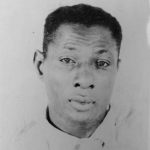

Roy Tyler was born in Kentucky in 1899; his parents were Randal and Harriot Tyler. He completed the fifth grade and then worked as a porter and farmhand before he enlisted in I Co, 3/24 Infantry on 13 April 1917. According to his records, he “gave age as nineteen (19), but was seventeen (17).” His file states, “Acquaintances state that he was industrious and well behaved, and was never known to be in any trouble. No record of arrests in civilian life.” His record also states, “This man was an asset to his organization.”
At trial he testified on his own behalf, stating: “I am 19 years old, come from Kentucky, and have been in the service seven months. On this night was marked quarters, and did not stand retreat. I fell in line at eight o’clock. I heard the guy say that a mob was coming, and ran out by the kitchen across Washington Street into the woods, and laid down. I stayed there about three hours, and came back to camp; went into my tent, looked at my watch, and it was 11:30. I had a sore foot. The doctor had taken out an ingrowing toe-nail. I did not have a shoe on that foot. I did not have a rifle or ammunition. I do not know Private Denty [prosecution witness]. I was in my tent until supper time, and did not hear what the men were talking about. I heard that Corporal Baltimore was hurt, but did not know he was in camp until next day. When I was standing in line the cry of mob and first shots came… No one was in the woods with me… I did not know Private Kane [?] before I was put in the stockade. I did not see him on the 23rd, and did not make the expression that I wanted to get a gang to go to town… I know Private J. C. Johnson, stayed in the same time with him, and never had any trouble with him, but little arguments. Never went around with him anywhere; do not know why Johnson testified that I was in the column that marched out; that Johnson lied, did not tell the truth. I had been marked quarters three or four days, and had not used my rifle, but it was in the tent. I had cleaned it the day before. I heard them talking about Corporal Baltimore before retreat, but heard no expressions that the men were angered. Did not do much walking on my feet for three or four days before the 23rd, just to meals and places like that.” The commanding officer, 24th Infantry, confirmed by telegram that the battalion rolls showed Private Tylor on sick report on August 23rd, marked light duty until the 25th. While in Leavenworth, Tyler submitted sworn affidavits from fellow soldiers – James R. Johnson, Richard Lewis, Joseph Wardlow, and Harry Richardson – all of whom testified that they had seen Tyler coming off sick call that day, that he could only wear one shoe, and so was unable to stand guard duty and was on Quarters, contrary to trial testimony by prosecution witness.
Tyler’s conduct record in prison, as of 1923, indicated that he had two minor violations of prison regulations in his file. Even so, he was appointed a trusty on March 21, 1923, with a notation reading, “This prisoner rendered aid when another inmate ran amok injuring several guards.” The Warden appended the following to his file: “On November 14th, 1922, when Joe Martinez, a Mexican murderer, killed Captain Andrew Leonard and wounded six guards by stabbing them, Tyler voluntarily entered the underground coal bunker and took a dagger from Martinez. His conduct, on this occasion, met with the highest commendation of the prison officials. Any one assisting Tyler will be aiding a worthy prisoner who possesses the full confidence and respect of the prison officials.” As a result of that, Tyler’s life sentence was commuted to twenty years.
In August 1923 Tyler’s mother, Violet Tyler, wrote to Colonel Hull with another appeal on her son’s behalf. Hull answered her on August 17th, 1923: “Dear Madam… I am no longer Acting Judge Advocate General of the Army, but I am this date transmitting the papers sent me to General Walter [?] A. Bethel, now Judge Advocate General, who will give the matter his most serious consideration.”
On April 22, 1924, the Clemency Board reported that Tyler would be eligible for parole on August 9, 1924; that he was at the present time 24 years old, and that he had been specially commended by the Warden for his conduct. “In view of Tyler being eligible for parole at an earlier date,” the Board wrote, “further clemency is not recommended.” The following June, the Board of Parole reported that Tyler was granted parole effective August 9, 1924. On August 16 that year, J. Edgar Hoover of the Bureau of Investigation informed the JAG that Tyler’s parole had been submitted to the Attorney General by the Boards of Parole.
Tyler was paroled from Leavenworth in September 1924 after seven years in prison. By then he had begun playing baseball on the Booker Ts baseball team in the prison system’s Inside League. The teams were semi-pro, and as strictly integrated as the prison itself, though they did play against white teams. Tyler had never played organized baseball before the army, but he was apparently a gifted natural athlete who quickly became a stand-out hitter and exceptional fielder. Tyler also became a friend of the famous black heavyweight boxer Jack Johnson, who spent a year in Leavenworth in 1920-1921. The boxer provided an introduction between Tyler and Rube Foster, the owner of the Chicago American Giants, a team in the Negro Baseball League. When Tyler was paroled, he was paroled directly to the Giants with Foster as his parole adviser – his work was to play baseball. He only played a few games as an outfielder in Chicago before transferring to Cleveland where he played for the Elite Giants, one of the worst clubs in the NBL.
Tyler drifted down to Fort Wayne, Indiana, where he got a job paying $150 a month to play and manage a semipro team. Eventually that fell through. When most of the other players went to Chicago, Tyler stayed in Indiana – that led to his second round of trouble with the law. The woman who ran the boarding house in which he roomed was apparently “on the game,” sidelining as a prostitute, and one night she was in an argument with an aggressive white man. Tyler came on the scene as he returned from work, and he threw the man out. The next day the white man lodged a complaint with the police that his wallet containing four dollars was missing; Tyler was arrested and sentenced to ten years for robbery.
Tyler was later released on parole, but trouble followed him. On March 13, 1934, the Adjutant General wrote to the JAG to inform him that Marvin H. McIntyre, Assistant Secretary to President Roosevelt, had contacted his office requesting information on Tyler’s case with a view toward granting him clemency. Tyler was back in the penitentiary at Leavenworth. He was on parole in Indiana when he was arrested and convicted on a charge of robbery. Tyler’s sentence was finally commuted and he was released from prison in September, 1936 when he was 37 years old. Six years later, in 1942, America was at war again and the draft was reinstated. Tyler wrote to the JAG, “I would appreciate if you will inform me if I am eligible to inlist [sic] again as I have my dishonorable discharge according to the draft laws I am subject to military service. My age is 42 years old.” Tyler eventually settled in Michigan, and worked as a caretaker at a Boy Scout camp until he died of a heart attack in 1983, at the age of 84.