

The woman, Sara Travers, was in her home and unaware that Houston Police offers Rufus Daniels and Lee Sparks had fired warning shots in what they believed was an illegal gathering of African Americans on a street corner of Houston's predominantly-black San Felipe district. Officers Daniels and Sparks had earned a reputation among black residents for their brutality and racial hatred. An illegal search of her home by the officers led to the severe pistol whippings and arrests of Private Alonzo Edwards, who offered to help Sara Travers, and later Corporal Charles Baltimore, who had come to inquire about the health and well-being of Edwards.
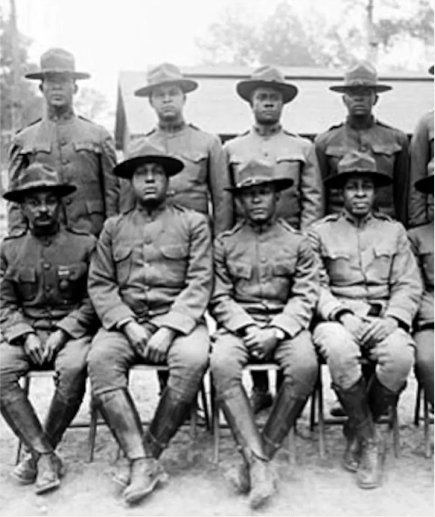
In the summer of 1917, before the American entry into World War I (1914-18), the 3rd Battalion of the 24th Infantry Regiment was ordered by the U.S. Army from Columbus, New Mexico, to Houston, Texas. Their orders were to guard the construction of a new Army National Guard training facility, Camp Logan. Upon arrival in Houston, soldiers of the 24th were subjected to racial violence, an integral component of how white southerners maintained a system of racial apartheid (segregation) known colloquially as Jim Crow.
Southern racial segregation (legal since 1896) was a racial caste system that provided for the near total separation of the races. There were separate drinking fountains, seating on public conveyances, separate eating sections in restaurants, separate schools and universities, and public such as swimming pools and the majority of private areas controlled by whites were off-limits to black Americans. In many southern states, blacks were threatened with physical violence if they attempted to register or vote in elections. Jim Crow was meant to keep African Americans from exercising their rights as citizens and to maintain political power in the hand of whites. Many African American soldiers during the time believed wearing their U.S. Army uniforms would shield them from humiliation and brutality. Some thought that because they were fighting to keep America free, whites would value their service to the country and treat the soldier more humanely. It did not.
On the evening of August 23, rumors spread through Camp Logan that the Houston Police Department had murdered Corporal Baltimore. In fact, he had been released and returned to the Camp. However, rumors also circulated that an armed white mob was coming to the Camp to murder soldiers. The officers of the 24th could not quash the rumors and a soldier who had smuggled a rifle fired into the air and yelled that a mob was approaching the Camp. An estimated 150 soldiers armed themselves, fired discriminately at buildings and organized themselves under the leadership of First Sergeant Vida Henry. They marched outside the Camp into the surrounding community, killing Rufus Daniels and another police officer. The soldiers mistook a white Illinois National Guard officer for a mounted police officer and shot and killed him. Sensing the seriousness of the shooting of a white Army officer, the soldiers began to leave. Some soldiers fled, hoping to hide; others returned to the Camp. The next morning Houston was placed under martial law.


